
Q & A
Dental sealants represent one of the greatest, but least known, advance of modern dentistry
What is a dental sealant?
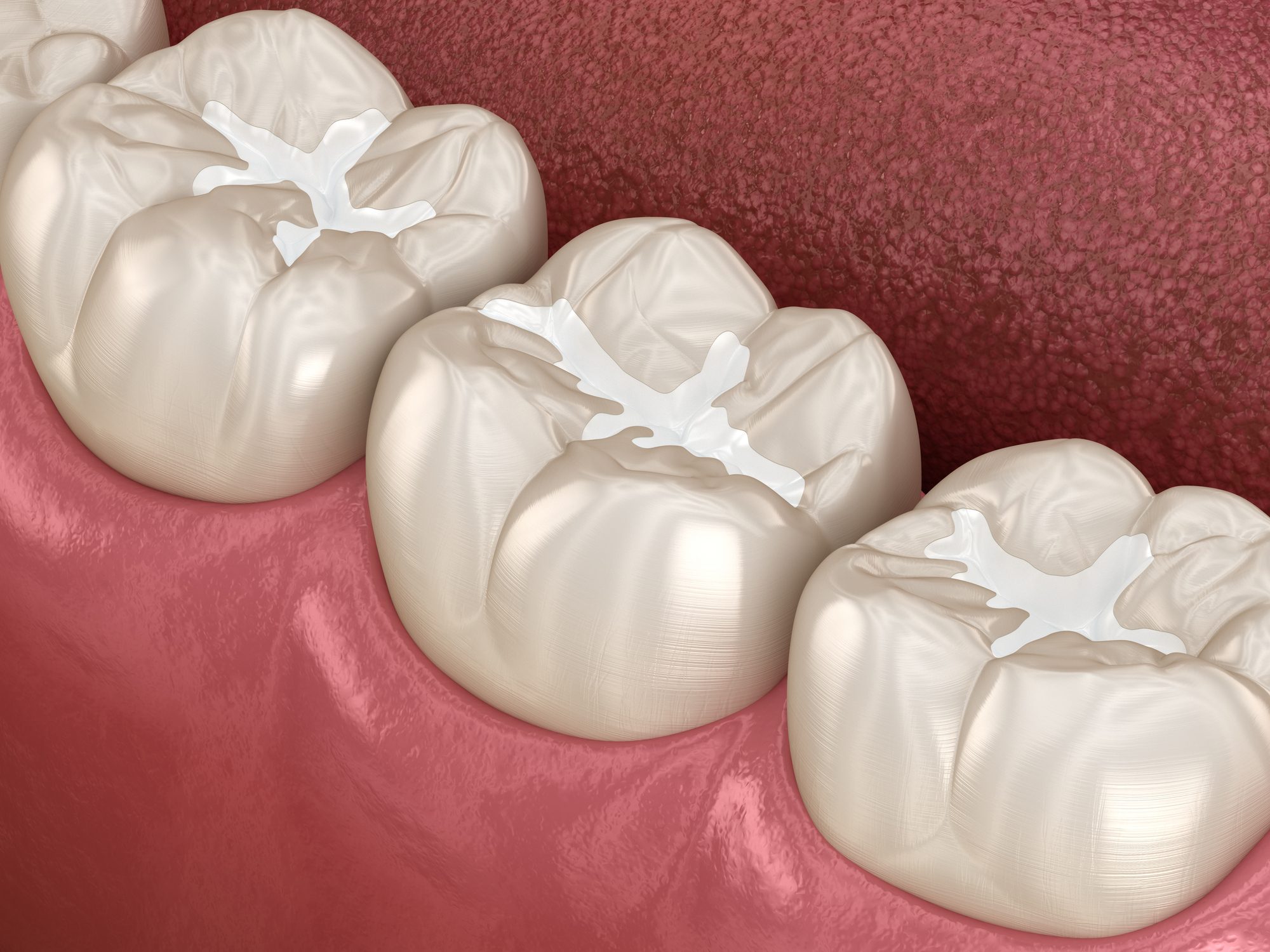
A dental sealant is a plastic coating applied to the chewing surfaces of back teeth which are rough and contoured with pit and grooves. Properly cleaning in this area can be more difficult because a toothbrush cannot fit into the narrow spaces to remove plaque. Dental sealants prevent dental decay in the grooves.
When to get dental sealants?
Decay starts early in life,so dental sealants are generally better placed at young age (usually around age 6 when the permanent teeth grow in). If a tooth already has a filling, then it does not get a dental sealant. Although dental sealants are usually applied early in life, adults at high risk of developing decay can also benefit from receiving them. Consult with your dentist to determine whether dental sealants are right for your kids' teeth, or even for you. The sooner these chewing surfaces can be sealed, the better.
Where should dental sealants be placed ?
The back teeth are usually treated, especially the molars. Sealants are applied to teeth with naturally deep grooves and edges, because teeth with these shapes are more likely to collect bacteria and food traces, causing tooth decay.
How are dental sealants applied?
The tooth that is to be treated will be cleaned and rinsed properly. It will be dried thoroughly after washing, then a special solution is applied to make the tooth surface rough. The sealant is then placed and after a short hardening time with special light, the sealant is polished to get a smooth and shiny surfaces.
How long do dental sealants last?
Dental sealants can last for a long period, 2 to 4 years is a more reasonable estimate. Sealants should be checked by a dentist during regular check ups and if needed they can be re-applied. If the layer on the tooth has worn down or if a sealant is chipped/comes off, the sealant can easily be replaced or repaired.
Why are they important?
Sealants can provide the chewing surfaces a 100% protection from dental decay or "cavities".
Are they safe?
Yes. Sealants are simple, painless, and sometimes require no drilling.
Why aren't sealants used on all teeth?
The liquid plastic is designed to flow into and fill the pits and grooves of the teeth. The plastic does not work on the smooth surfaces of the teeth, like the fronts, backs and sides of the teeth
How much do they cost?
Treatment is cost effective because sealing a tooth costs less than filling one. Check with your dentist about specific costs.
What else can be done to prevent cavities?
Brush and floss every day. Use fluoride toothpaste. Visit your dentist for regular check-ups and fluoridation. Take healthy foods and avoid candy and foods with lots of sugar.
"Tooth decay is preventable. Dental sealants just may prevent future visits and ensure that your teeth are safe and healthy."